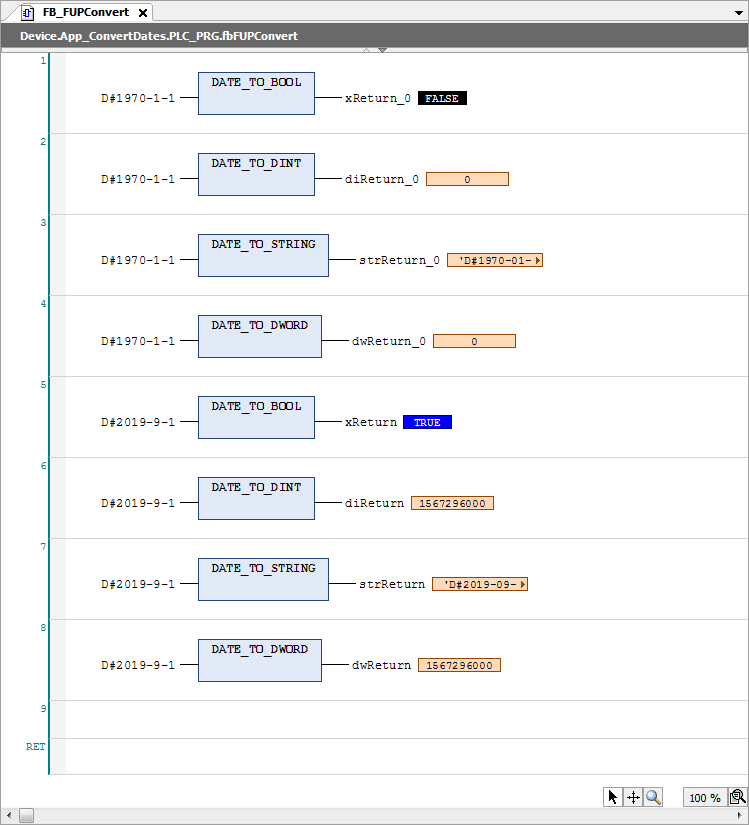
The operators convert a date and time value into the specified data type and return a type-converted value.
The data types DATE and DT use the same memory format internally and are stored as DWORD. The resolution for DATE is 1 day. The resolution for DT is 1 second. Both begin at January 1, 1970. TOD is stored as DWORD with a resolution of 1 millisecond.
The keywords DT and TOD are alternative spellings for the data types DATE_AND_TIME and TIME_OF_DAY. However, the latter are not mapped as a type conversion command.
The data types LDATE and LDT and LTOD use the 64-bit memory format LWORD internally.
Call syntax: DATE/DT/TOD_TO_< target type> ( <operand> )
Call syntax: LDATE/LDT/LTOD_TO_< target type> ( <operand> )
|
Operand |
Data Type |
Description |
|---|---|---|
|
Variable or literal |
|
Table 16. Operators: DATE/DT/TOD_TO_<target type>
|
DATE_TO_<type> |
DT_TO_<type> |
TOD_TO_<type> |
Example |
Return Value |
Description |
|---|---|---|---|---|---|
|
|
|
|
|||
|
|
|
|
|||
|
|
|
|
|||
|
|
|
|
|||
|
|
|
|
DATE_TO_BOOL(D#1970-1-1) DATE_TO_BOOL(D#2019-9-1) DT_TO_BOOL(DT#1970-1-1-0:0:0) DT_TO_BOOL(DT#2019-9-1-12:0:0) TOD_TO_BOOL(TOD#0:0:0) TOD_TO_BOOL(TOD#12:0:0) |
|
If and only if the operand value can be interpreted as "0", then the operator returns a |
|
|
|
|
|||
|
- |
|
|
Resolution in seconds (although only the day is displayed) |
||
|
|
|
|
DATE_TO_DINT(D#1970-1-1) DATE_TO_DINT(D#1970-1-2) DATE_TO_DINT(D#2019-9-1) DT_TO_DINT(DT#1970-1-1-0:0:0) DT_TO_DINT(DT#1970-1-1-0:0:1) DT_TO_DINT(DT#2019-9-1-12:0:0.0) TOD_TO_DINT(TOD#0:0:0) TOD_TO_DINT(TOD#12:0:0) |
|
|
|
|
- |
|
|||
|
|
|
|
|||
|
|
|
|
|||
|
|
|
|
|||
|
|
|
|
|||
|
|
|
|
|||
|
|
|
|
|||
|
|
|
|
|||
|
|
|
|
|||
|
|
|
|
|||
|
|
|
|
|||
|
|
|
|
|||
|
|
|
|
DATE_TO_STRING(D#1970-1-1) DT_TO_STRING(D#1970-1-1-0:0:1) TOD_TO_STRING(12:0:1) |
|
|
|
|
|
|
|||
|
|
|
- |
|||
|
|
|
|
|||
|
|
|
|
|||
|
|
|
|
|||
|
|
|
|
|||
|
|
|
|
|||
|
|
|
|
DATE_TO_WSTRING(D#1970-1-1) DT_TO_WSTRING(D#1970-1-1-0:0:1) TOD_TO_WSTRING(12:0:1) |
|
Table 17. Operators: LDATE/LDT/LTOD_TO_<target type>
|
LDATE_TO_<type> |
LDT_TO_<type> |
LTOD_TO_<type> |
Example |
Return Value |
Description |
|---|---|---|---|---|---|
|
|
|
|
|||
|
|
|
|
|||
|
|
|
|
|||
|
|
|
|
|||
|
|
|
|
|||
|
|
|
|
|||
|
|
|
|
Seconds (although only the day is displayed) |
||
|
|
|
|
|||
|
|
|
|
|||
|
|
|
|
|||
|
|
|
|
|||
|
- |
|
|
Nanoseconds (although only the day is displayed) |
||
|
|
- |
|
|||
|
|
|
|
|||
|
|
|
|
|||
|
|
|
|
|||
|
|
|
- |
|||
|
|
|
|
|||
|
|
|
|
|||
|
|
|
|
|||
|
|
|
|
|||
|
|
|
|
|||
|
|
|
|
|||
|
|
|
|
|||
|
|
|
|
|||
|
|
|
|
|||
|
|
|
|
|||
|
|
|
|
|||
|
|
|
|
The operands of type DATE, DATE_AND_TIME, TIME_OF_DAY, DT, or TOD, which are passed to an operator for a data and time conversion, are converted to their constant syntax (literal syntax). The generated string contains the keyword D#, DT# or TOD# and then the size with its data and time unit, as indicated in the IEC 61131-3 standard.