Configuring the "Winder Tension" TA
This technology application can be used to configure an open or closed-loop tension-controlled winder drive.
The material is wound up or unwound by a centre-driven winding shaft. The torque of the winder motor indirectly determines the tensile force at the material. The speed of the winder changes depending on the diameter. The torque increase proportionally with the diameter.
The speed in the machine module is not determined by the winder. The material must have a fixed point so that the winder can be used to build up web tension.
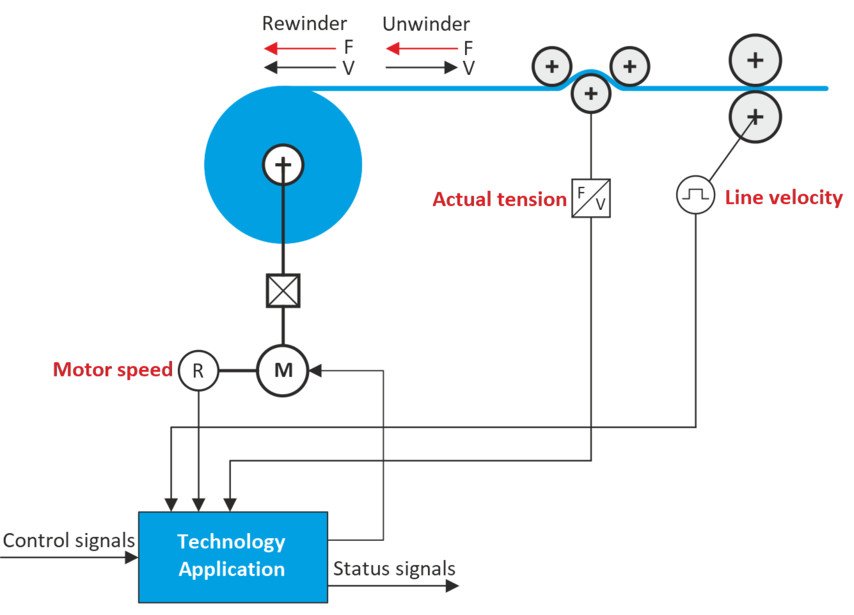
Fig. 1: Schematic diagram of a winder drive
The Winder Tension technology application can be used both for winders with an open-loop tension control and with a control system for the tensile force setpoint. The tension control is used when there are higher requirements for the consistency of the tensile force and disturbances cannot be compensated for.
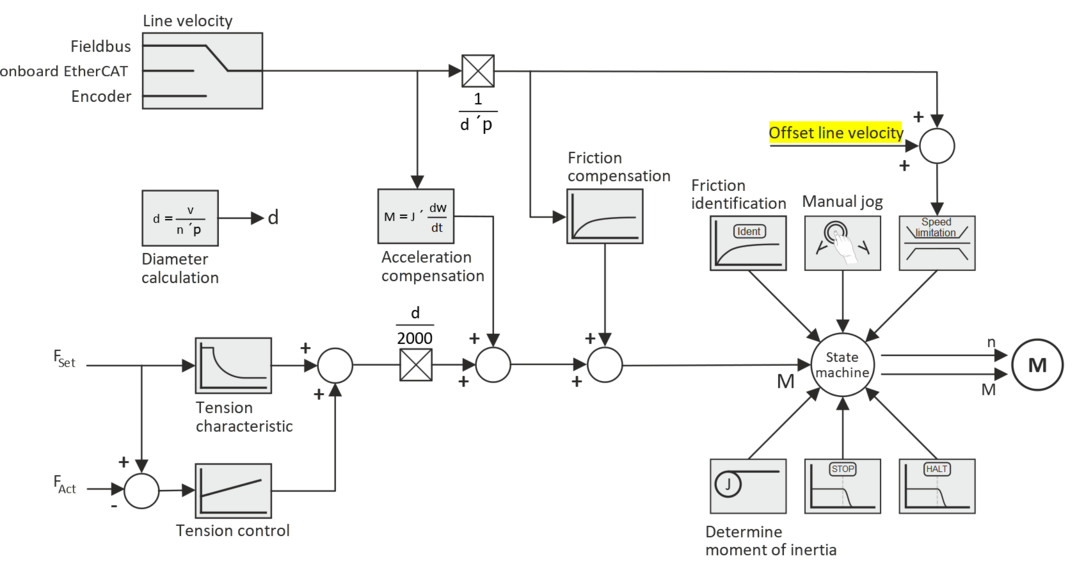
Fig. 2: Signal flow of the Winder Tension technology application
Open-loop tension control
When using tension-controlled (open loop) winders, there is no need for the sensors for detecting web tension.
The open-loop tension control is suitable for winder systems such as:
–
Reels
–
Kabelwickler
–
Margin winding unit
–
Unwinder
Closed-loop tension control
Tension-controlled (closed loop) winders are suitable for:
–
High torque setting ranges
–
Unexpected disturbances
Tension control is suitable for use with winder systems such as:
–
Folien
–
Composite material
–
Paper
–
Labelling material
The Winder Tension technology application has the following functions:
 Defining the winding direction