L_MC1P_IndexToParameter2 (function)
This function converts a CANopen index into a parameter number.
|
|
|
|
L_MC1P_IndexToParameter2 |
|
|
|
|
|---|---|---|---|---|---|---|---|
|
UINT |
- |
|
uiIndex |
L_MC1P_IndexToParameter2 |
|
- |
DINT |
|
USINT |
- |
|
usiSubindex |
|
|
|
|
|
UINT |
- |
|
uiByteLength |
|
|
|
|
|
BOOL |
- |
|
xUnsigned |
|
|
|
|
|
|
|
|
|
|
|
|
|
Parameter
Return value
|
Name Data type |
Meaning |
|
|---|---|---|
|
L_MC1P_
DINT |
Parameter number (the value is generally a negative number)
|
|
Example
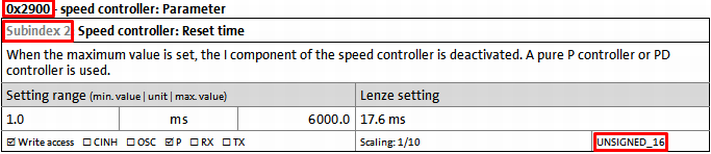
This example illustrates the conversion of the Speed controller: Reset time parameter (index = 0x2900, subindex = 2) to a parameter number. The byte length can be determined from the data type of the parameter. In the example: UNSIGNED_16 corresponds to a byte length of two.
For parameters with the "Signed" data type, the xUnsigned parameter can be set to False or L_MC1P_IndexToParameter (function) can be used.